Coding on Rubber parts
Part numbers, batch codes and dates on rubber hoses, seals, gaskets, belts and moulded parts.
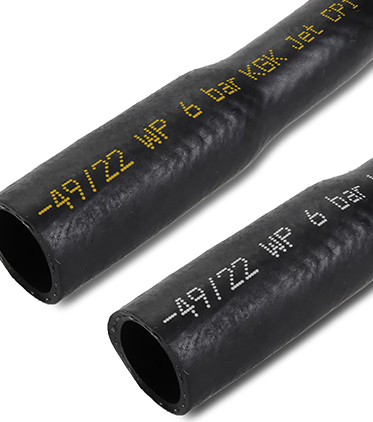
Readable marks on dark, flexible and sometimes oily rubber
Rubber parts are dark, flexible and often slightly oily or dusty from moulding. Hoses, seals, gaskets, belts and moulded components for vehicles, farm machinery and industry all need a part number, batch or date code that stays readable through handling, flexing and storage.
Inkjet with light-coloured inks gives good contrast on black rubber, and fast-setting inks grip well once the surface is clean. Laser marking leaves a permanent mark with no ink at all, which suits parts that flex, heat up or stay in service for years. We choose between them after looking at your compound and process.
What we mark on rubber parts
- Part numbers and product names
- Batch and lot numbers
- Cure or production dates
- Size and specification details
- Barcodes and QR codes for traceability
Key features
What you can expect from a coding system set up for this pack.
- Contrasting inksLight-coloured inks stand out on black rubber, where black ink would vanish.
- Permanent laser optionLaser marks do not rub off or fade, which suits parts that flex, heat up or stay in service for years.
- No-contact markingNo pressure on soft or flexible parts, so hoses and seals keep their shape.
- Traceable codesBatch and date marks tie each part to a production run for quality checks.
Built for Kenyan production lines
Kenyan makers of hoses, seals, gaskets and moulded parts supply vehicle and machinery workshops, farms and industry, and a part that cannot be identified is a part that cannot be reordered.
- Marks that stay readable through dust, oil and handling on workshop floors.
- Help choosing between high-contrast inkjet and laser for your rubber compound.
- Batch codes that help trace a part if a quality question comes back from a customer.
- Local inks, solvents and spares, with maintenance plans for busy production.
- Operator training so message changes between part numbers are quick.
Recommended equipment
The products we most often fit for this application.
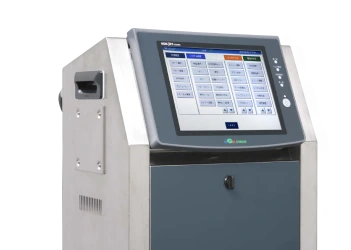
Continuous inkjet printers
High-contrast inkjet marks on moving or moulded rubber parts.
Explore product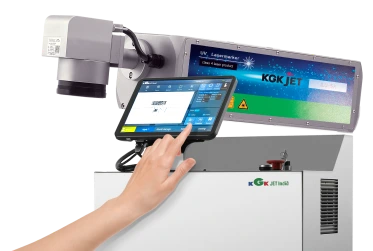
Laser marking machines
Permanent, ink-free marks on rubber parts that respond to laser.
Explore product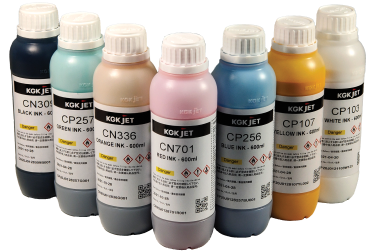
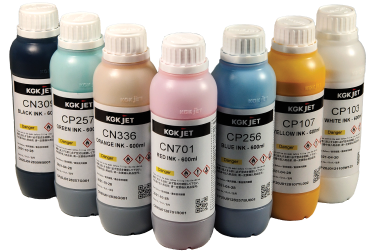
Inks and consumables
Coloured inks for dark rubber, alongside black options for lighter compounds.
Explore productHow we work with you
Whatever you come to us for, the same clear process applies from first call to ongoing support.
-
Assess
We learn about your product, packaging, line speed and what needs to be printed.
-
Recommend
We propose the right printer, ink and layout, with a clear quote.
-
Install and train
We install and commission the system and train your operators on the line.
-
Support
Inks, spares and maintenance keep production running, with our team a call away.
Common questions
Can you mark black rubber so the code is easy to read?
Yes. Light-coloured inks give strong contrast on black rubber, and laser marking is an ink-free alternative. We recommend one after looking at your compound.
Does the surface need to be clean?
A clean, dry surface gives the best adhesion. Parts with release agent or oil on the surface may need a wipe or a different print position, which we assess on your line.
Will the code survive flexing?
Laser marks stay put when parts flex. For inkjet, durability depends on the ink and the compound, so we confirm this before recommending a system.
Explore other applications
See how we approach coding on other kinds of packaging.
- Coding on Pouch
- Coding on Tetra Pak
- Coding on Flexible Films and Foil
- Coding on PET Bottles
- Coding on Carton Box
- Coding on Rigid Containers
- Coding on Shrink wrap
- Coding on Glass Bottles
- Coding on Cable and Wire
- Coding on Pipe
- Coding on Metal
- Coding on Label
- Coding on Ceramic
- Coding on Wood
- Coding on Food
- E-Commerce Packaging
- Software Integration - Coding Application
- Coding on HDPE Bags
Ready to talk about your line?
Tell us what you pack and how fast you run, and our team will respond with options and next steps.
Make an enquiry