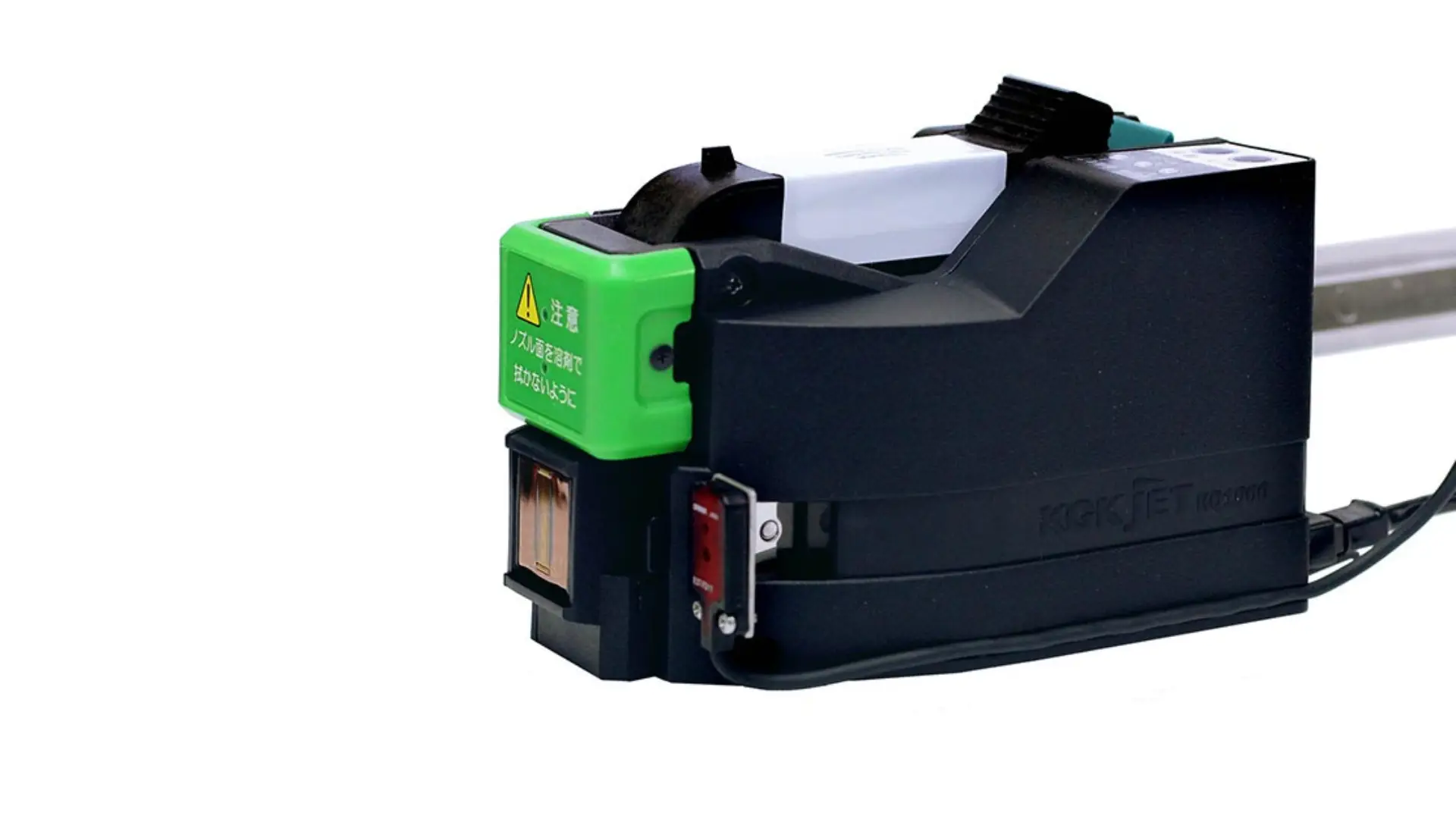
When a code smudges, fades or rubs off, the printer usually takes the blame. In practice, a large share of coding problems come from a mismatch between the ink and the surface it is printed on. The right ink dries fast, sticks well and survives everything the pack goes through after the line. The wrong one can look fine at the printer and fail on the shelf.
This guide explains how to choose an industrial inkjet ink in plain terms: start with the surface, know the main ink families, think about what happens after printing, and always test before you commit. Follow the manufacturer’s instructions for your printer where they differ from the general advice here.
Start with the surface
Every surface behaves differently, and the first question is whether it is porous or non-porous.
- Porous surfaces such as paper, cardboard and corrugated board absorb ink, so codes dry quickly and rarely smear. Water-based and oil-based inks are the usual choice, mostly on drop on demand printers.
- Non-porous surfaces such as plastic, glass, metal and coated board do not absorb ink. The ink has to grip the surface as it dries, so fast-drying solvent-based or UV-curable inks are normal.
- Low-energy plastics such as polypropylene and polyethylene are harder to stick to and need inks made for good adhesion.
- Glossy, laminated and metallised films can reject an ink that is not matched to them.
- Dark surfaces such as black rubber need a light-coloured ink for contrast, or a laser mark instead of ink.
Coatings, release agents and oils on the surface matter as much as the material itself, so note what is on the surface when you ask for advice.
Know the main ink families
You do not need to be a chemist, but it helps to know what each family does.
- Solvent-based inks, for example MEK or ethanol based, are the workhorse of continuous inkjet printing. They dry fast and bond to many non-porous surfaces. They are flammable and need careful handling and storage.
- Water-based inks suit porous surfaces and some specific uses. They dry more slowly on non-porous surfaces.
- Oil-based inks are mostly used on porous materials such as cardboard and wood.
- UV-curable inks are cured by UV light, which makes them tough on non-porous surfaces, but the printer needs a UV lamp.
- Pigment inks use solid colour particles for strong opacity, for example white on dark packaging, or heat-resistant codes on retort pouches.
- Special inks include edible inks for marking food directly and fluorescent inks that show only under UV light, used for security marks.
Think about what happens after the line
A code that looks perfect at the printer still has to survive the journey. Before you choose an ink, list everything the pack will meet.
- Moisture and condensation from chilled storage.
- Rubbing in cartons, crates and conveyors.
- Sun and rain for stock stored outdoors.
- Washing or sterilising, such as bottle washers or retort.
- Heat in warehouses and on trucks.
- Handling by retailers and customers.
Each of these points to a different requirement. A bottle that goes through a washer needs a very different ink from a carton that stays in a dry store.
A good code is a partnership between the printer, the ink and the surface.
Match drying time to your line speed
Ink must dry before the product touches anything. Faster lines and tighter conveyor layouts leave less time, so they need faster-drying inks and sometimes a better print position. Drying also changes with temperature and humidity, so the right grade can differ between a hot afternoon and a cool morning.
Tell your supplier your line speed, the distance from the printer to the first point of contact, and the typical temperature in your plant. These three facts narrow the choice quickly.
Food, safety and regulations
If an ink could touch food, or the pack carries food, confirm with your supplier that the ink is suitable and follow the food safety rules that apply to you. Edible inks exist for direct marking, but they are specific grades, not a general option.
Whatever ink you use, keep the safety data sheet to hand and follow its instructions for handling, ventilation, storage and disposal. Solvent-based inks are flammable, so keep them away from heat and ignition sources.
Store inks properly, especially in warm climates
Heat and sunlight shorten the life of inks and solvents. In a warm country like Kenya, store them sealed, in a cool, shaded, ventilated place.
- Use stock in date order, first in and first out.
- Check expiry dates when you receive stock and again before you use it.
- Never mix inks or top up with a different fluid.
- Order what you will use, rather than holding large stocks of inks with a short shelf life.
Expired or non-standard fluids can damage filters and pumps, which costs far more than the ink you saved.
Test before you commit
The only reliable way to know is to test on your own packs, in your own conditions. A simple routine takes little time.
- Print on the actual product or pack, from the actual batch of material.
- Check the drying time by touching or smearing the code at the first point of contact on the line.
- Rub the code with a finger and a cloth after an hour and again after a day.
- Wet it, or chill it, if your packs are chilled or washed.
- Stack and ship a few packs, then check them again.
- Record the results and the ink grade, so you can repeat what worked.
Ask for help early
Your supplier sees many surfaces and can often recommend an ink straight away, or tell you what to test. At Uptime Coding we recommend inks for continuous inkjet and drop on demand printers after looking at your product, your surface and your line, and we suggest proving the choice on your own samples before you buy.
You can see the families we supply on our inks and consumables page, or tell us about your pack and we will respond with options.
Final thoughts
Choosing ink does not have to be complicated. Start with the surface, know the families, think about the journey after the line, store the ink well and test before you commit. Get those right and most coding problems never appear.
Need help choosing an ink? Get in touch with our team.