Every product that leaves a factory needs to say something about itself: when it was made, which batch it came from, and when it should be used by. How that information gets onto the pack depends on the coding technology you choose, and the wrong choice can mean smudged codes, slow lines and constant maintenance.
This guide compares the three technologies most manufacturers consider, continuous inkjet, drop on demand and laser marking, and finishes with a checklist you can use before you buy.
Why the choice matters
A coding printer sits at the end of your line, which means any problem it causes appears when the product is already made, filled and packed. A code that rubs off, prints in the wrong place or cannot be read by a scanner can lead to rejected deliveries, rework or, in the worst case, a product that cannot be traced.
The right technology depends on three things: what you print on, how fast the line runs, and how much information each code must carry. Getting those three right avoids most problems later.
Continuous inkjet (CIJ)
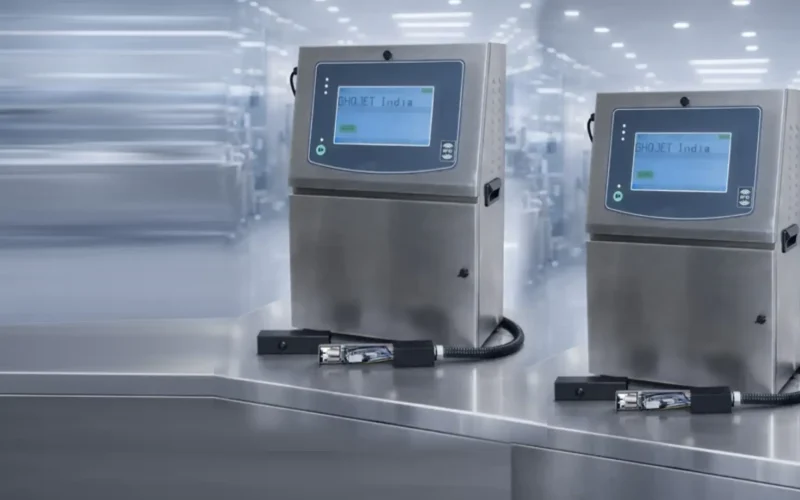
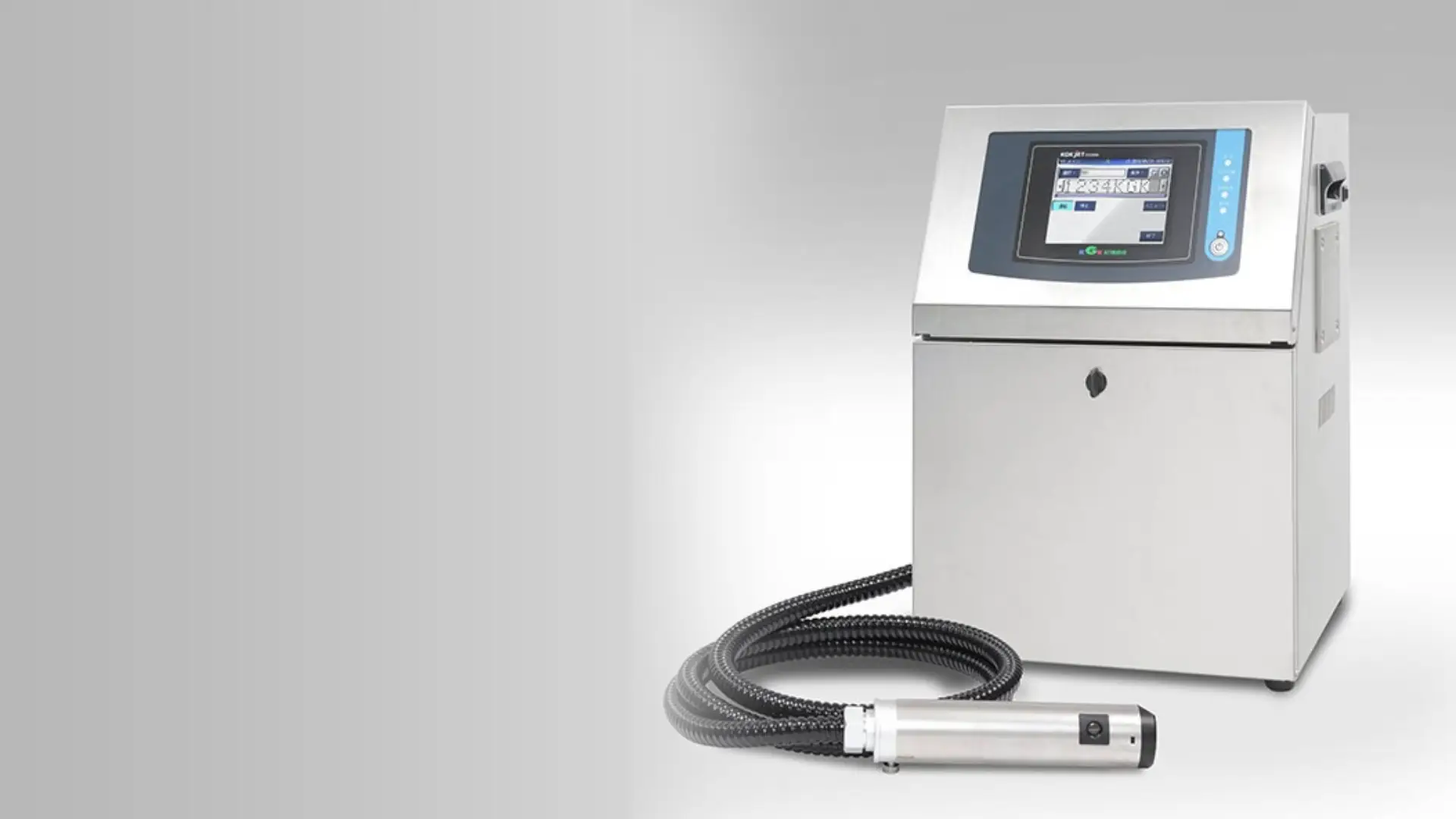
Continuous inkjet printers fire a steady stream of tiny ink droplets from a nozzle. The droplets that are needed are charged and steered onto the product, and the rest are recycled back into the system. Because the printer never touches the product, it can code almost anything that moves past it.
CIJ is the most common choice for primary packaging, such as bottles, cans, pouches, tubs and cables.
- Strengths: very high line speeds, small characters, and the ability to print on curved, textured or uneven surfaces.
- Inks: fast-drying inks suit plastic, glass, metal and film, and special inks are available for tougher or wetter surfaces.
- Limits: CIJ printers use solvent make-up fluid and need regular cleaning, and they perform best when the environment is reasonably clean.
Drop on demand (DOD)
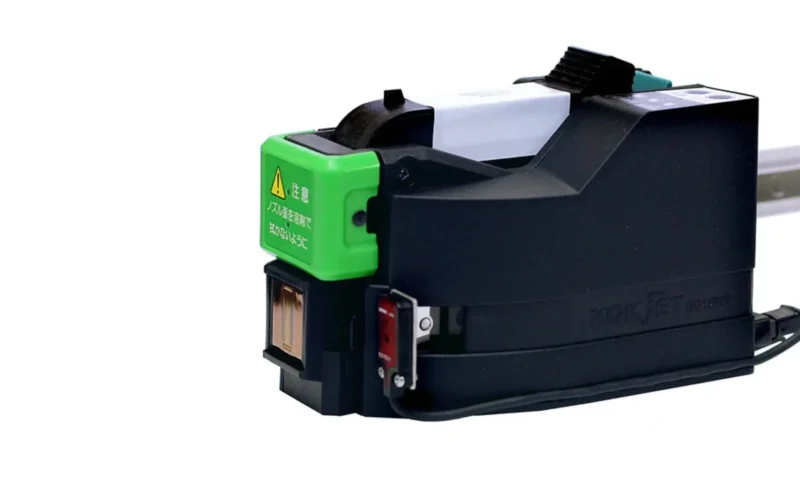
Drop on demand printers, often called large-character printers, release ink only when and where a character is needed. Rather than a continuous stream, each drop is fired by a small valve or element, which gives bolder, larger characters.
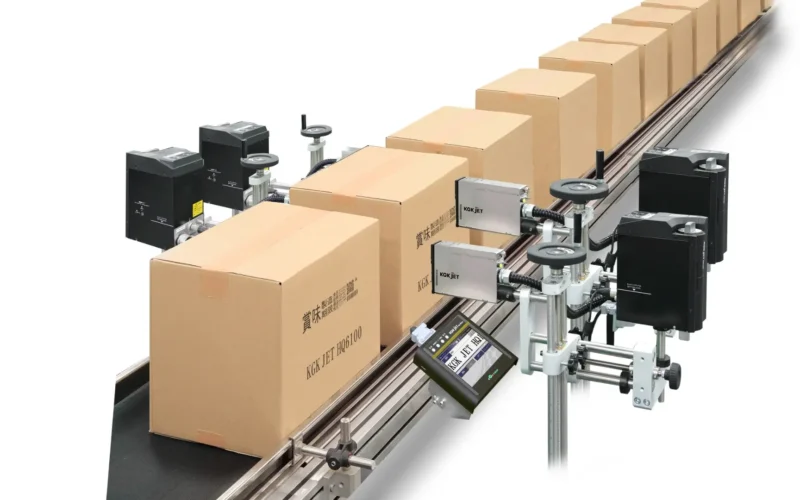
DOD is a popular choice for secondary packaging such as cartons, cases and trays, where codes must be large enough to read from a distance.
- Strengths: large, clear characters and barcodes on porous surfaces such as cardboard, with several print heads driven by a single controller.
- Maintenance: generally lower than CIJ, with less solvent use.
- Limits: the print head must stay close to the surface, and the resolution is lower than CIJ, so DOD is not suited to tiny codes on small products.
Laser marking
Laser marking uses a focused beam of light to alter the surface of a material, so the code becomes part of the product instead of sitting on top of it. There is no ink, no solvent and nothing to refill.
Different lasers suit different materials, so the choice of laser matters as much as the choice of printer.
- UV lasers work well on many plastics, films and glass, and give fine, high-contrast marks with little heat.
- CO2 lasers suit organic materials such as paper, cardboard, wood and some plastics.
- Fibre lasers are the usual choice for metals and some engineering plastics.
Laser marks are permanent and very hard to tamper with, which makes them attractive for products that need long-term traceability. The trade-offs are a higher purchase price, the need for fume extraction and safety measures, and the fact that results depend heavily on the material being marked.
Side by side: which suits which?
As a rough guide, here is where each technology tends to fit best.
- Bottles, cans, pouches and tubs on fast lines: continuous inkjet.
- Cartons, cases and shipping boxes: drop on demand.
- Cable, pipe and wire: continuous inkjet or laser, depending on the sheath and how permanent the mark must be.
- Metal parts and engineered components: fibre laser.
- Glass and some plastics where permanence matters: UV laser.
- Paper and cardboard wraps: CO2 laser or inkjet.
These are starting points, not rules. A sample test on your own product is always worth doing before you decide.
Questions to ask before you choose
- What material and shape am I coding, and is it wet, oily, dusty or textured?
- How fast does the line run, and does it ever speed up?
- How much information goes into each code: a date and batch, or a barcode and a logo too?
- How permanent must the code be, and who needs to read it?
- What does the environment look like in terms of temperature, humidity and dust?
- What will the code cost to run over a year, including ink, solvent, spare parts and downtime?
- Who will look after the printer day to day, and what training do they need?
Look at total cost, not just purchase price
A printer that is cheap to buy can still be expensive to run. Ink and solvent are the obvious running costs for inkjet, but spare parts, downtime and operator time often matter more. Laser marking costs more up front but removes ink and solvent from the equation entirely.
When you compare quotes, ask for an estimate of consumables per year at your production volume, the expected maintenance interval, and the cost of the most common spare parts. These numbers tell you more than the headline price.
Common mistakes to avoid
- Choosing a technology before testing it on the actual product and packaging.
- Ignoring the environment, then wondering why the printer clogs or the code smears.
- Buying for today’s line speed instead of the speed you expect next year.
- Skipping operator training, which is the cheapest way to prevent faults.
- Forgetting to plan for spare parts and ink supply.
How we can help
At Uptime Coding, we start with your product and your line. We ask what you are coding, how fast you run and what the code must say, then recommend a technology and test it on your samples where possible. After installation we supply inks and spare parts and look after maintenance, so the printer keeps doing its job.
Final thoughts
No single coding technology is best for every product. Continuous inkjet, drop on demand and laser marking each solve a different problem, and the right choice comes from understanding your product, your line and your goals. Take the time to test, ask the questions above, and look at the full cost of ownership.
If you would like help choosing, get in touch with our team and tell us a little about your line.